Recent happenings:
- I streamed with the Semaphore team on how they are making their CI/CD platform "ai-native" and what that really means. They've got a claude/codex plugin system that comes with a CLI, skills, and MCP for controlling your CI. Podcast coming soon.
- I streamed with the co-founder of nono.sh, my go-to agent sandboxing tool, that can now, more or less, sandbox anything on Linux and macOS. Podcast coming soon.
- I ran a workshop last week on GitHub Actions security hardening; you can watch the 2-hour training and get all the resources for free, thanks to Chainguard.
- In this video, I explain why I switched from Ghostty terminal to Supacode to better manage all my agent sessions and git projects. It's my most popular YouTube video so far in 2026.
How is GitHub ensuring agents are safe in our CI/CD?
CI providers and automation tools are developing various ways to use LLM prompts or agents. There's no standard way to safely run agents and one-shot prompts in CI, so each platform is building it out differently.
For GitHub, that effort created "Agentic Workflows" as a stand-alone tool for creating a new type of workflow with built-in hardening and safety features. It supports all Agents (not just Copilot) and is generated from a markdown file you write.
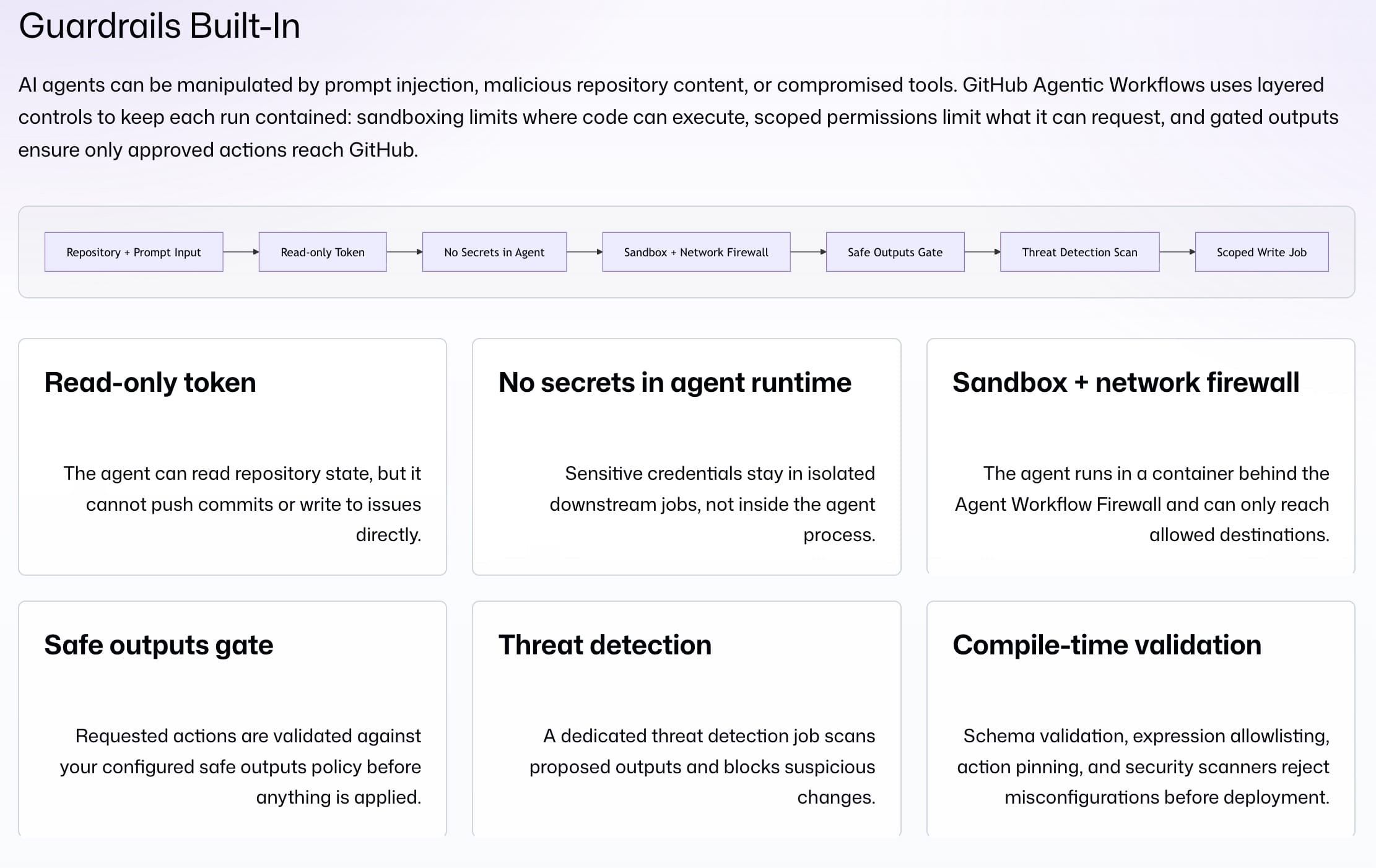
The *ONLY* way I'd feel safe adding LLMs in my GitHub Actions is with this new Agentic Workflows. Prompt injection risk is just too great, and GitHub Agentic Workflows also locks down the agent, giving it a read-only file system and no access to secrets. It also filters input and output and controls networking to ensure the model only has access to the minimum resources it needs to perform the work.
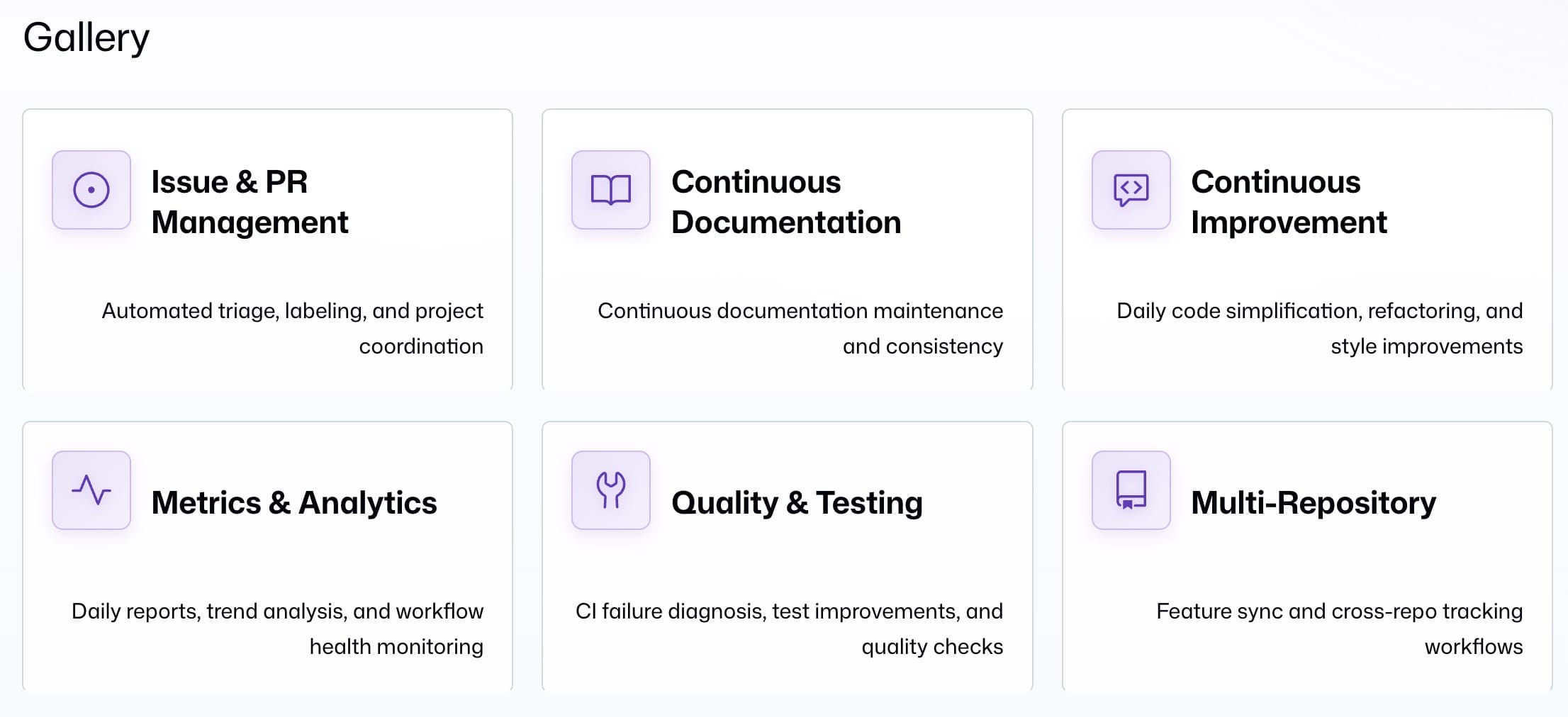
I think my favorite thing is that GitHub provides docs and templates on specific areas that they've found to be useful for adding LLMs in workflows. When I got started with "AI in my CI" I was quite unsure about where it would be safe and still useful to do so. Here, they've done some of the work for us.
I was lucky to have two researchers from Microsoft and GitHub who helped build this feature over the last year, and we dug into the details on my Agentic DevOps podcast! After watching that, you can get started in their docs.